Welcome
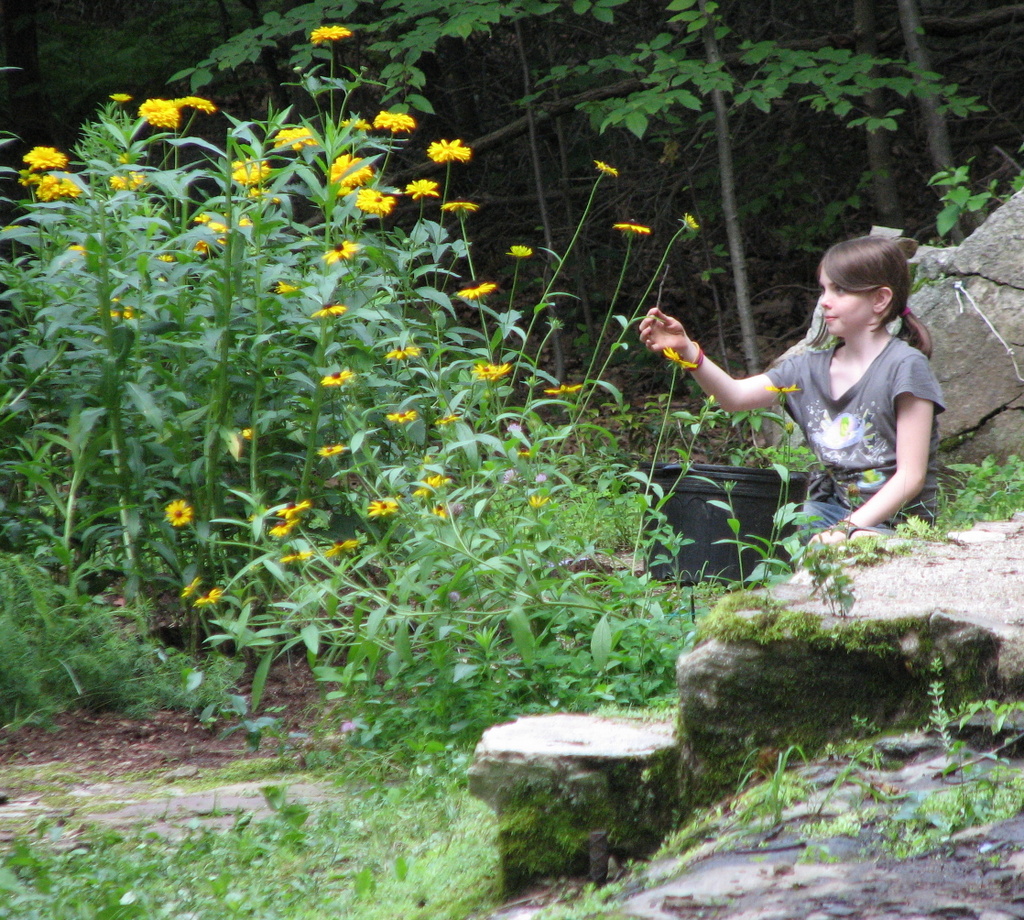
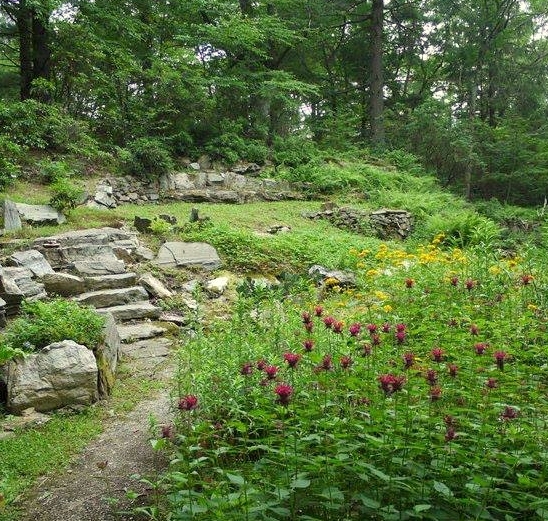
The Eklund Wildflower Garden is located at 10 Oak Valley Road, near Hope Lake in Shelton, Connecticut, on the site of a former upscale log cabin built in the 1930's (CLICK for directions). The cabin, pool, and other buildings are gone, but the garden beds and stone work remain. The garden is stocked with perennials native to the greater Northeast. The garden is located in the heart of the 500-acre Shelton Lakes Greenway and is accessible by car as well as by hiking or biking the extensive trail network
Please don't take plants from the wild. Many native species can be purchased by local nurseries.
A Wildflower Refuge
Many of our native woodland species were lost during colonial times, when nearly the entire state was clear-cut and farmed. As farmland was abandoned over the past century and fields have reverted to woodlands, some plant species, such as pink lady slipper and red trillium, have returned.
While new subdivisions and roads have certainly impacted our native flora, a much greater threat is the growing deer population. In nearby communities such as Ridgefield and Redding where the deer population has swelled to unsustainable levels, the deer have stripped the forests of nearly all vegetation except for a few invasive species.
Unless population control measures are taken, the deer population can be expected to rise in Shelton. Eklund Garden and the area immediately surrounding it will be protected by deer fencing, safeguarding an island of biodiversity that can serve as a seed reservoir if the deer population is reduced.
What is Native?
Eklund Garden is stocked with plants that are native to the greater northeastern United States, with an emphasis on plants that are thought to be native to Connecticut. Natural ranges for a particular plant species are not always well-known due to poor records, and various botanical resources may conflict with each other. We do our best.
Due to climate changes, plants that once survived in Connecticut at the southern edge of their range may now find the climate too hot and dry, and plants that once grew only as far north as New Jersey or Pennsylvania may now find Connecticut to be within their new "natural" range. Our plantings reflect the realities of a warmer, dryer climate than what colonists found several hundred years ago.
We also focus on plants that are native to the acidic Oak-Hickory forest that surrounds Eklund Garden. We do also have a 'marble bed' for plants native to the marble valleys of Connecticut's northwest corner.